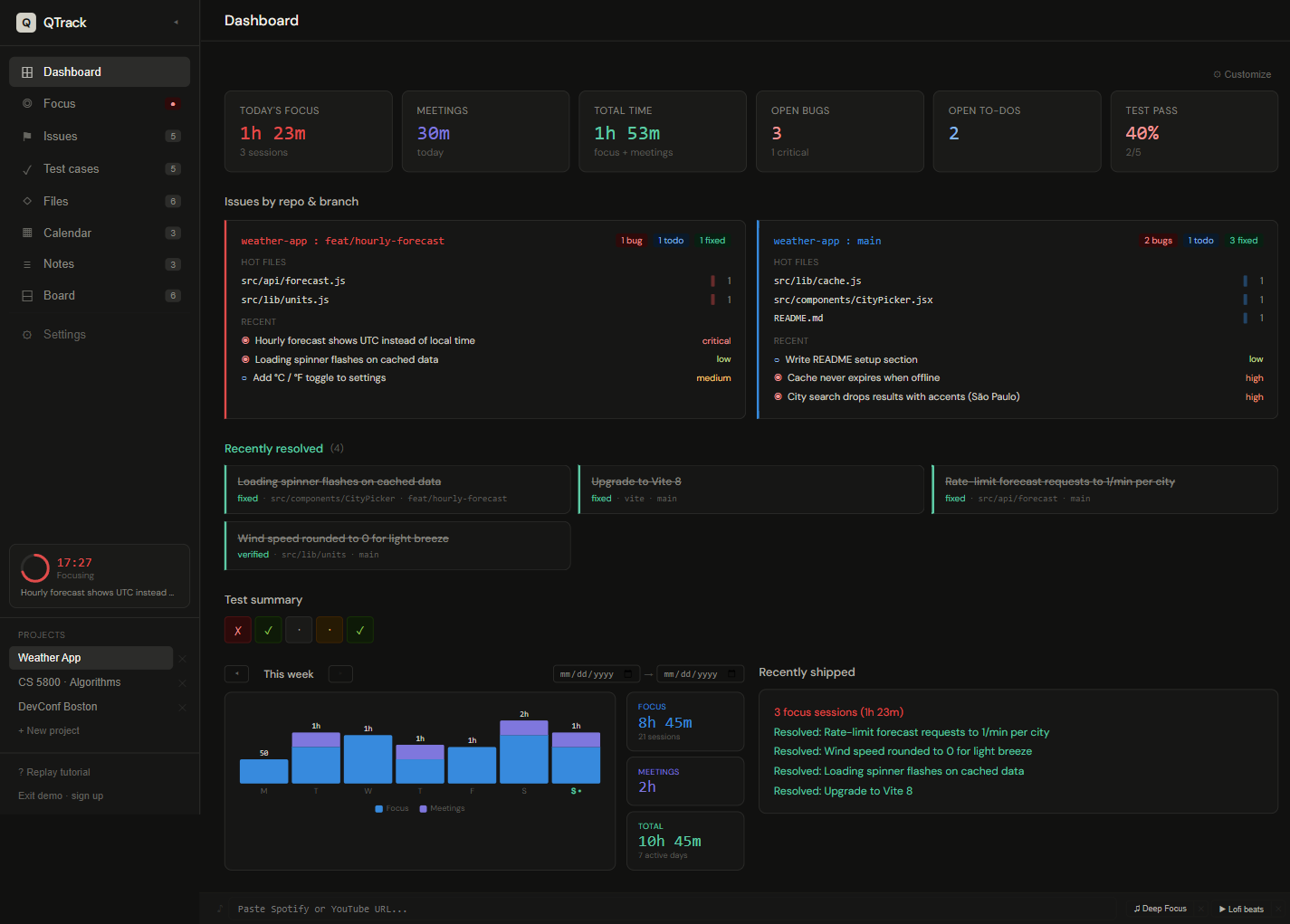
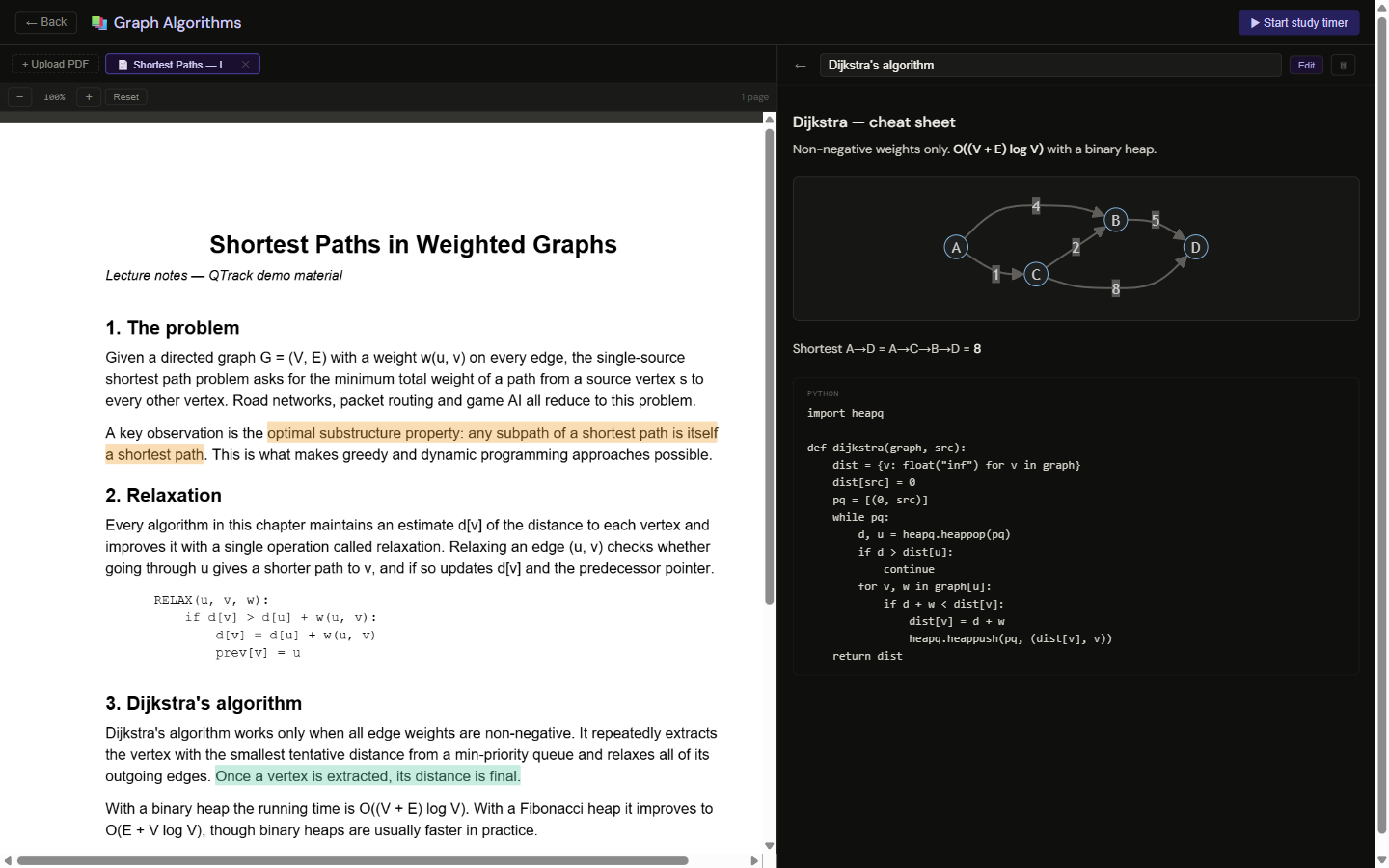
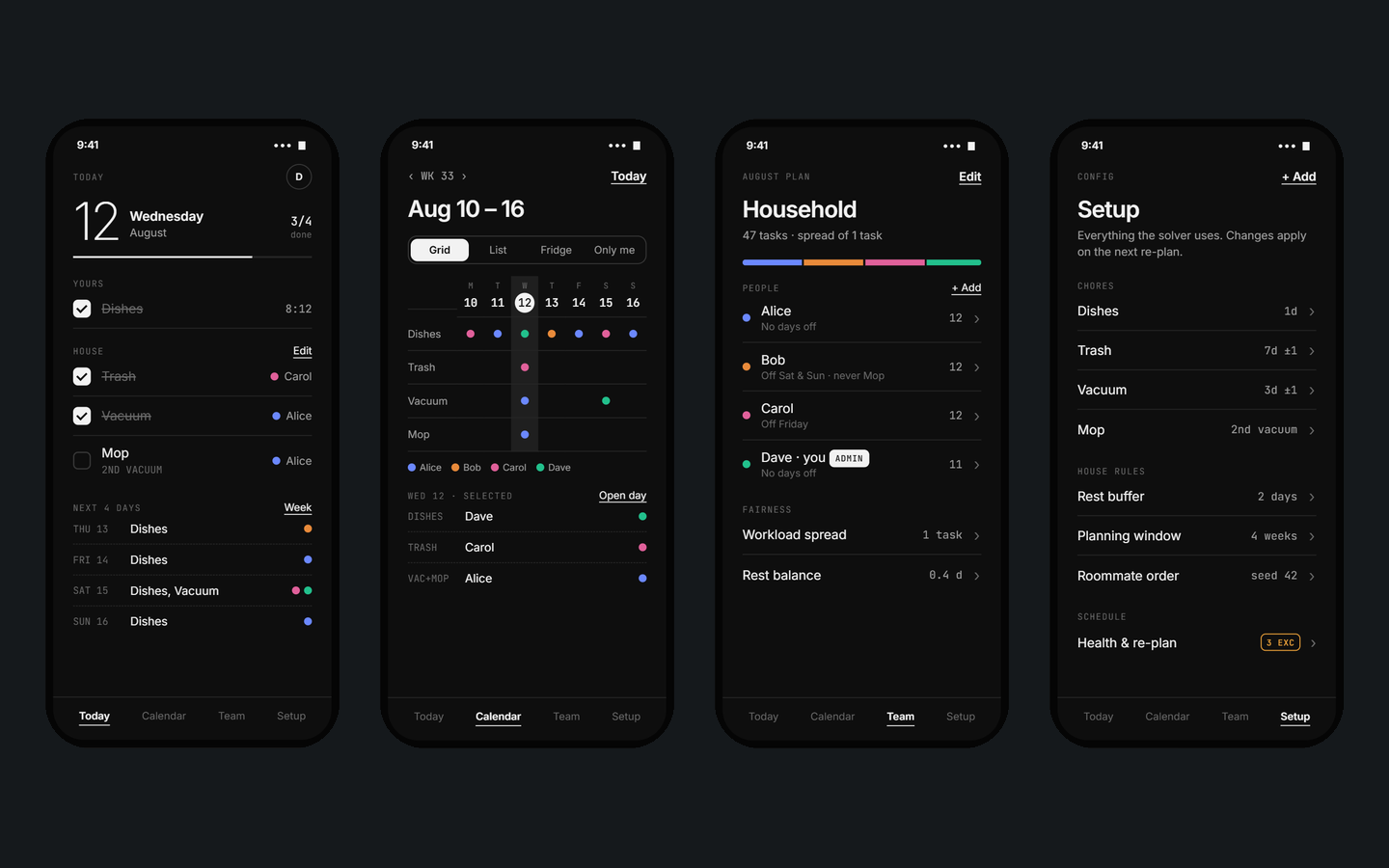
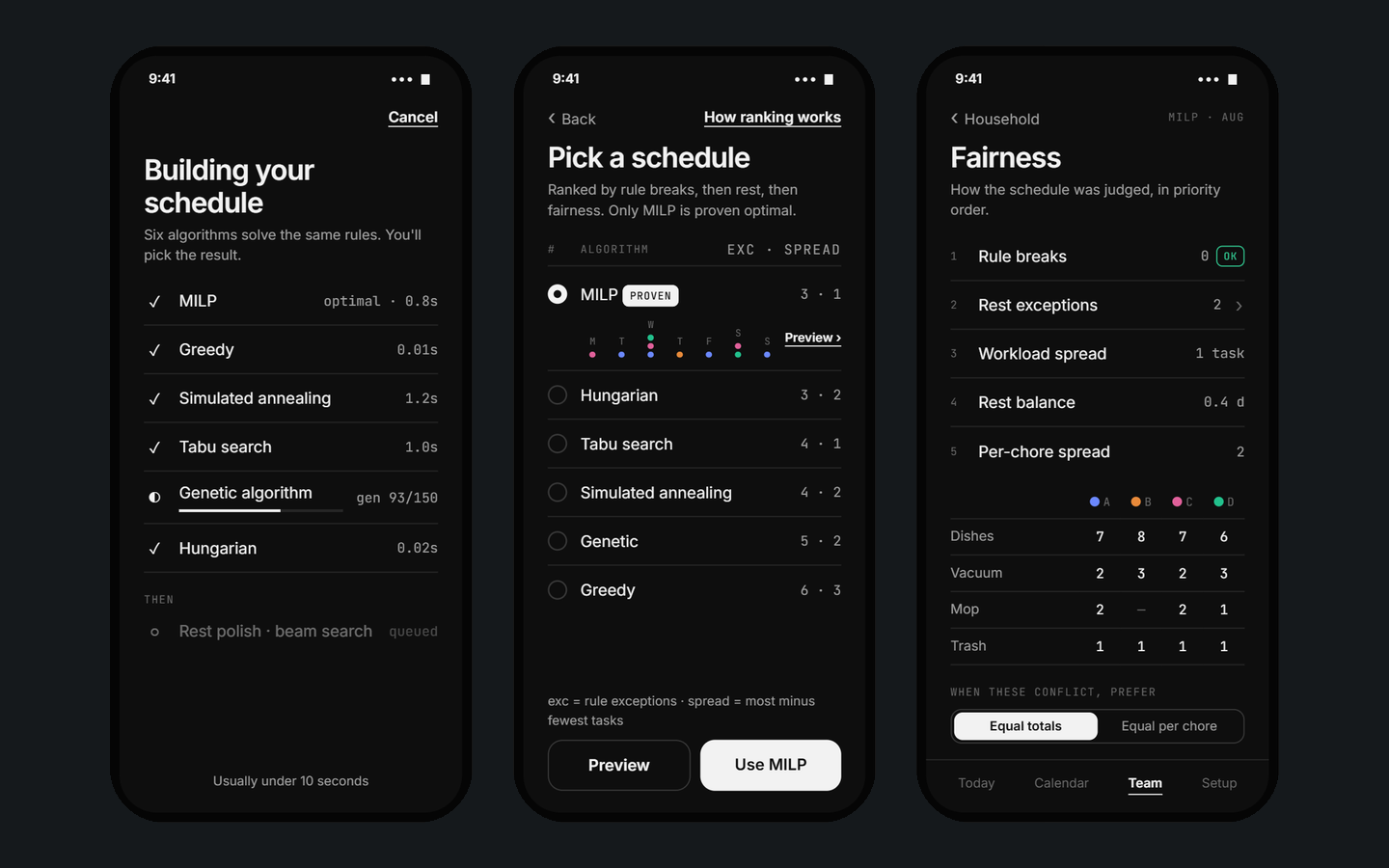
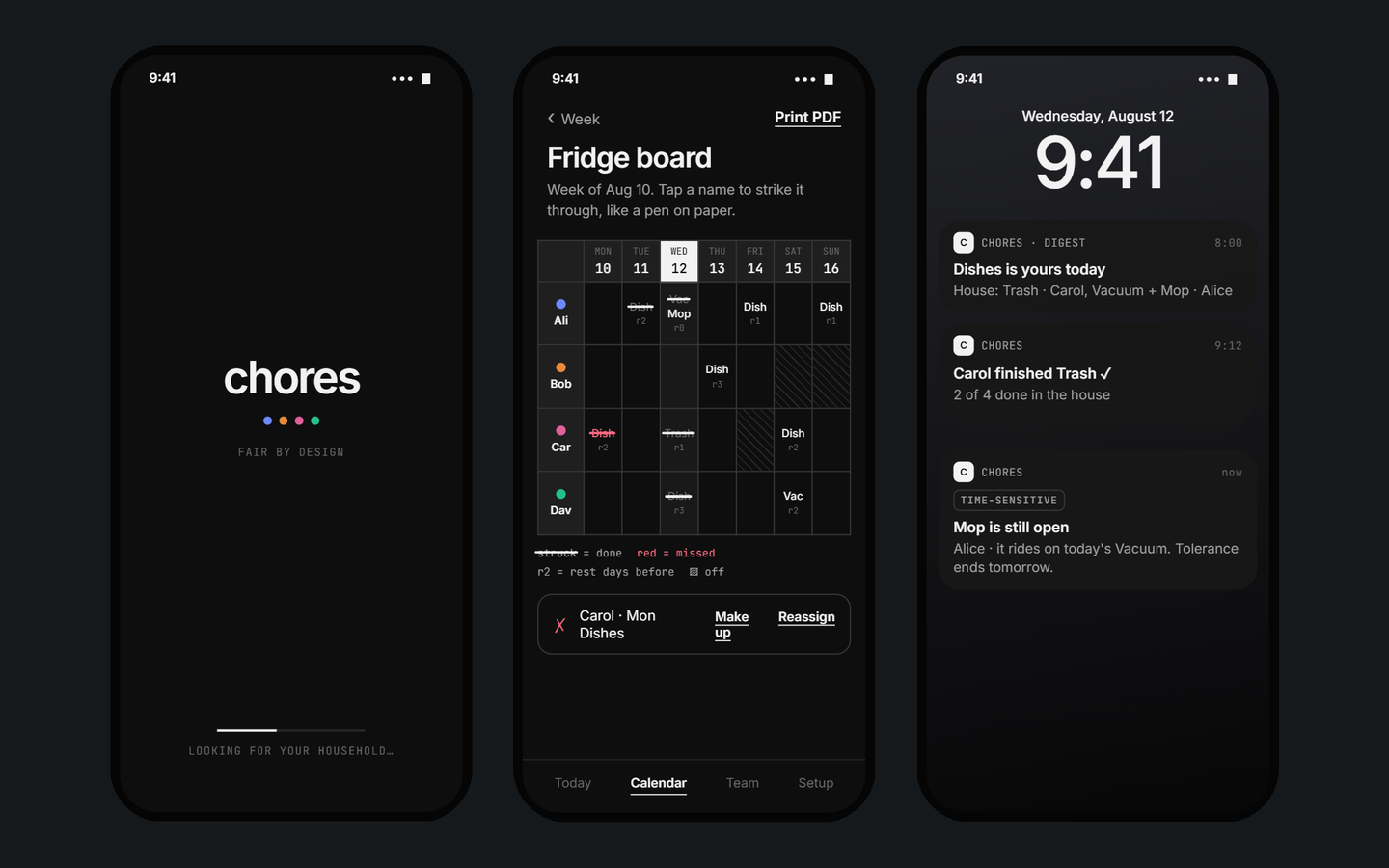
Things I built outside work to learn a stack end to end. Screenshots are from the running apps, except Chore Scheduler, which shows its mobile UI mockups.
agentic-binders/
Healthcare / Pharmain progress
Agentic AI that generates document binders for a global pharmaceutical company, with traceability, evaluation and guardrails.
Designing and building the agentic AI that generates the binders.
Designing the traceability framework for what the agents produce.
Designing the evaluation framework for generated binders.
Added guardrails to an agent that runs jobs on HPC GPU clusters: command allow-lists, input and prompt-injection checks, output checks, and GPU and job limits.
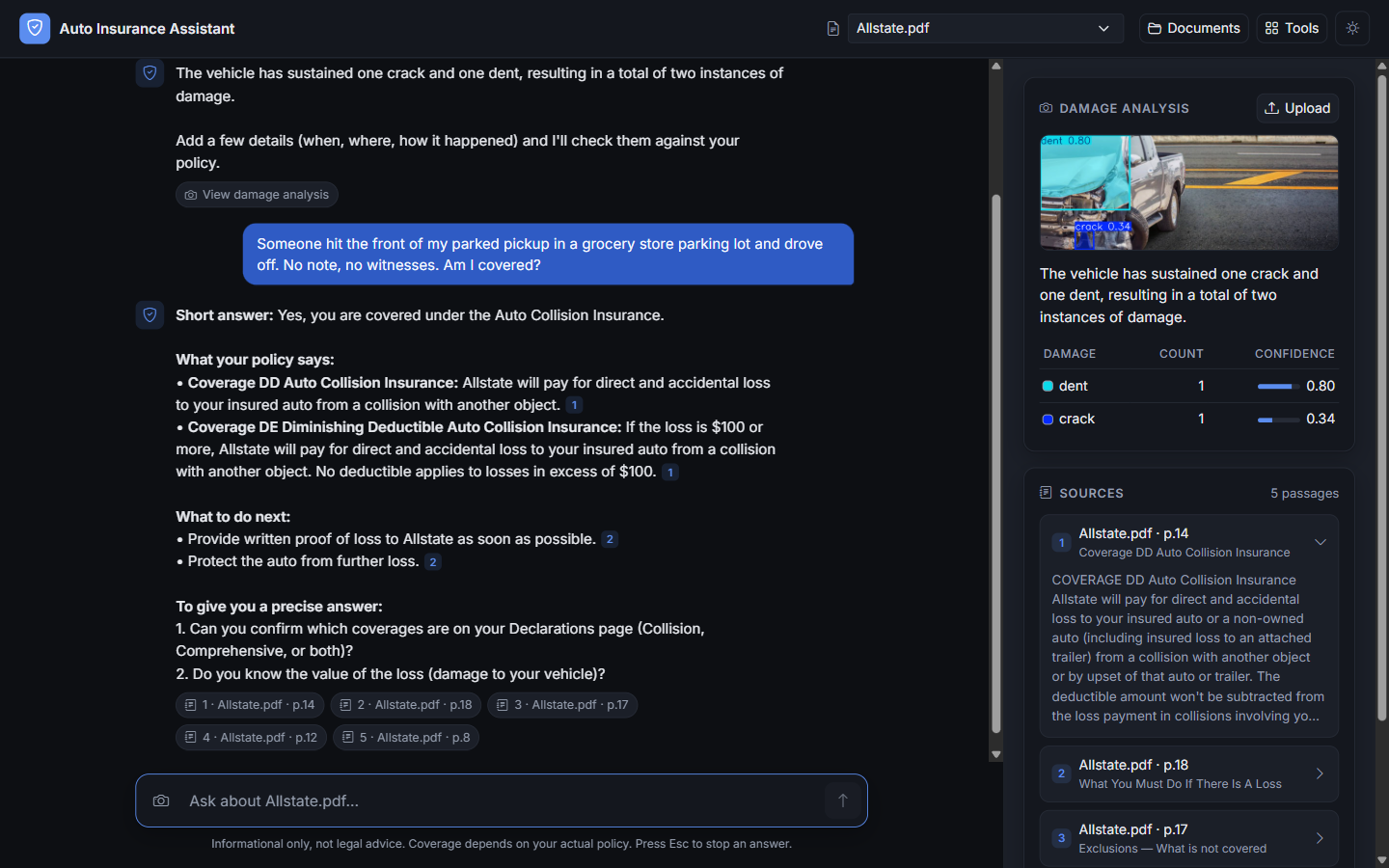
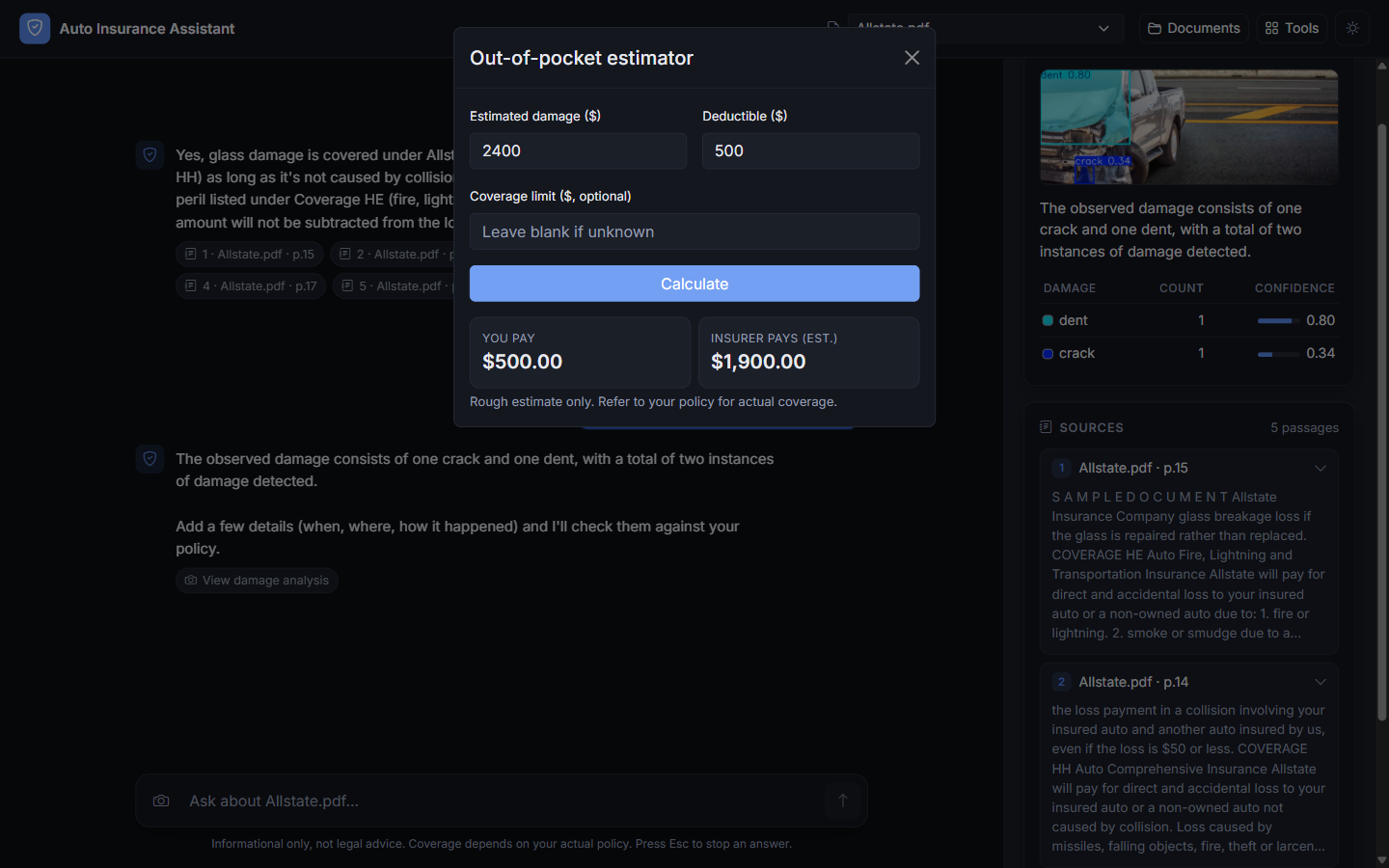
Claims assistant that answers from policy PDFs with citations, routes each loss to the right coverage, and is graded by its own evaluation harness.
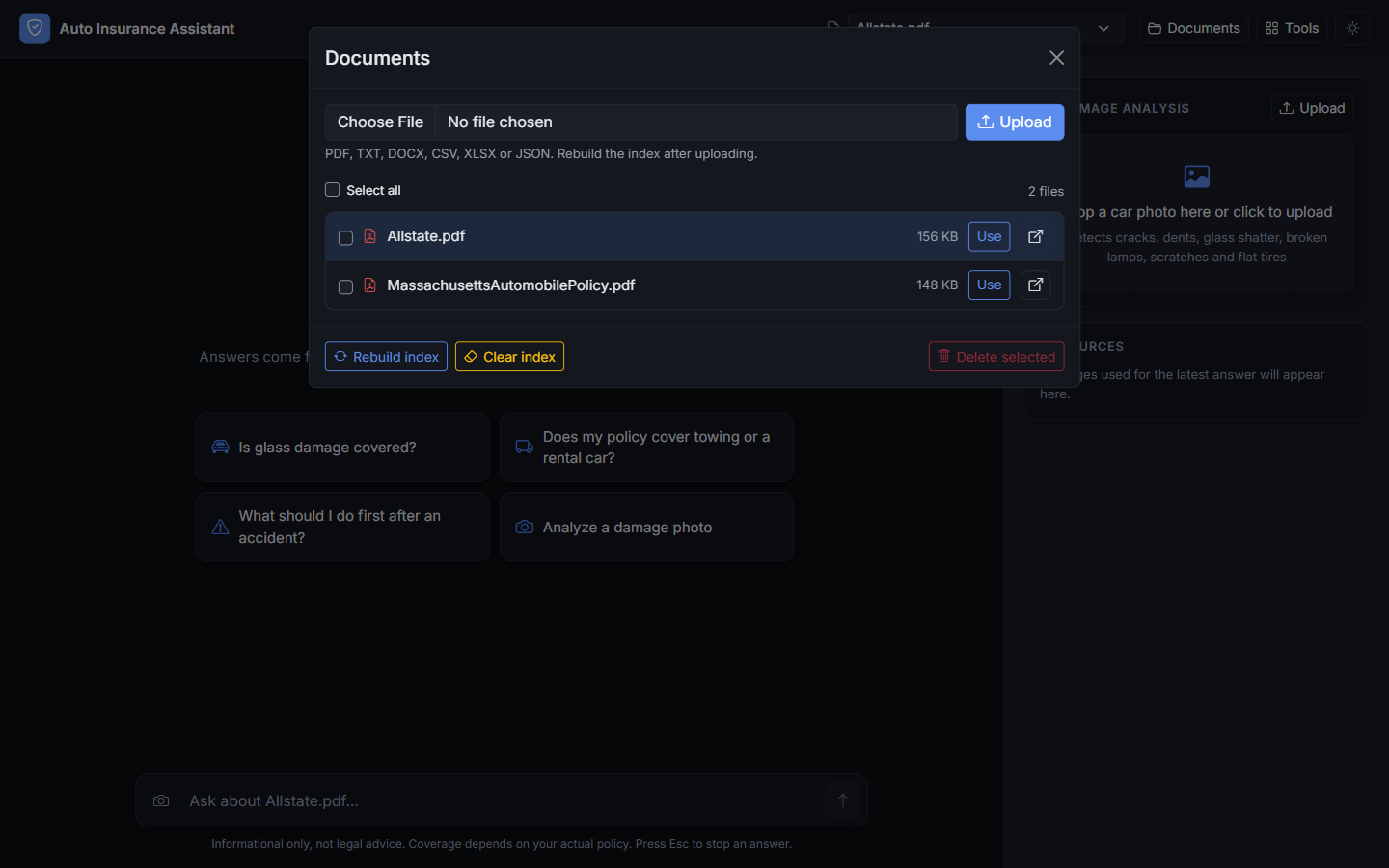
RAG over policy PDFs: section-aware chunks across page breaks, all-MiniLM-L6-v2 embeddings in FAISS, and cited answers with file, page range and policy section.
LLM coverage routing picks the policy sections that fit the loss before retrieval, and pulls in that part's exclusions.
Evaluation harness of 12 claim scenarios logged as MLflow runs (pass rate, retrieval hit rate, citation accuracy, latency), with every chat turn traced as route, retrieve and LLM spans.
YOLOv11 segmentation for six vehicle-damage classes; packaged with Gunicorn, a non-root Docker image and Kubernetes manifests (Kustomize) with health probes.
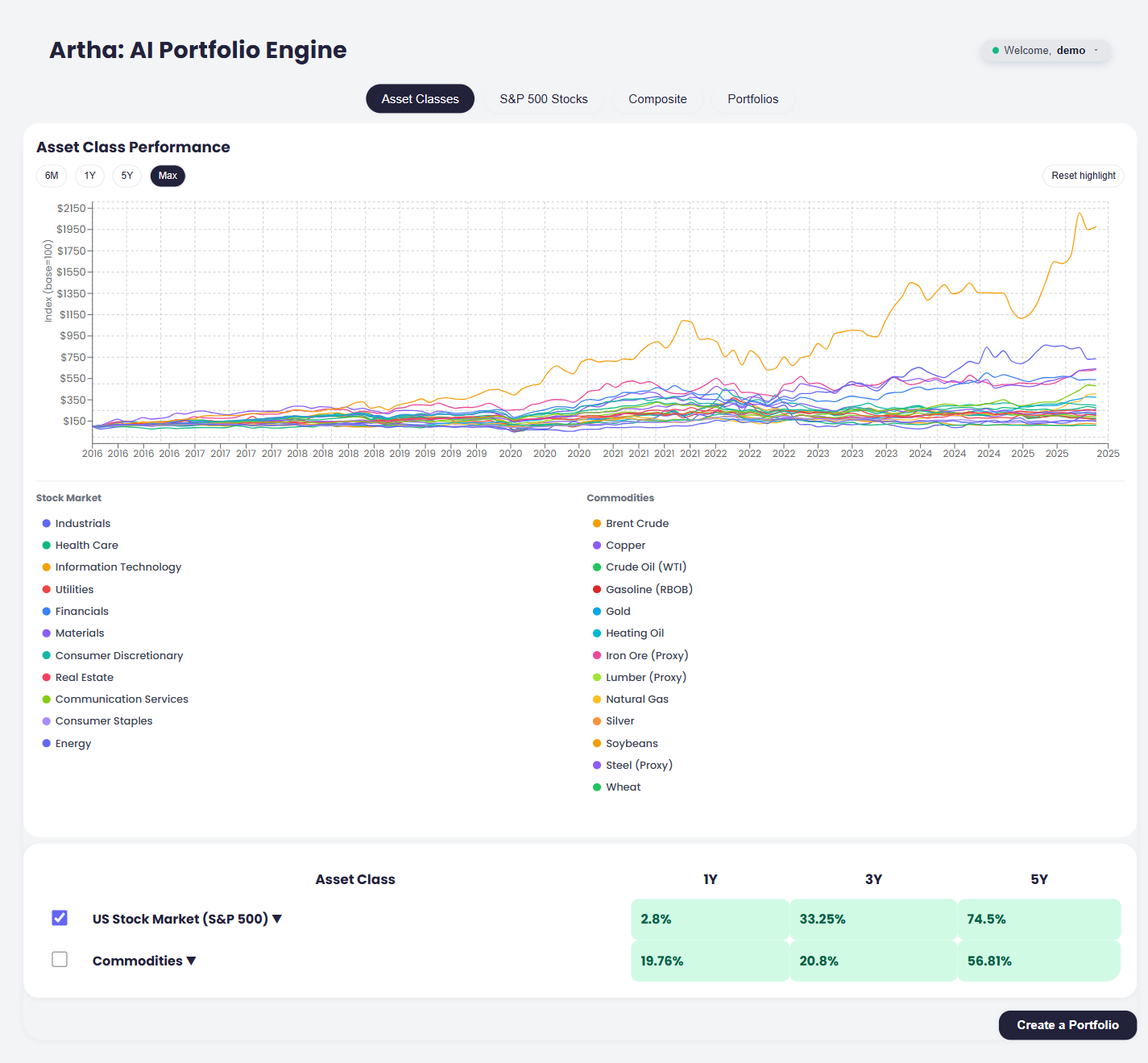
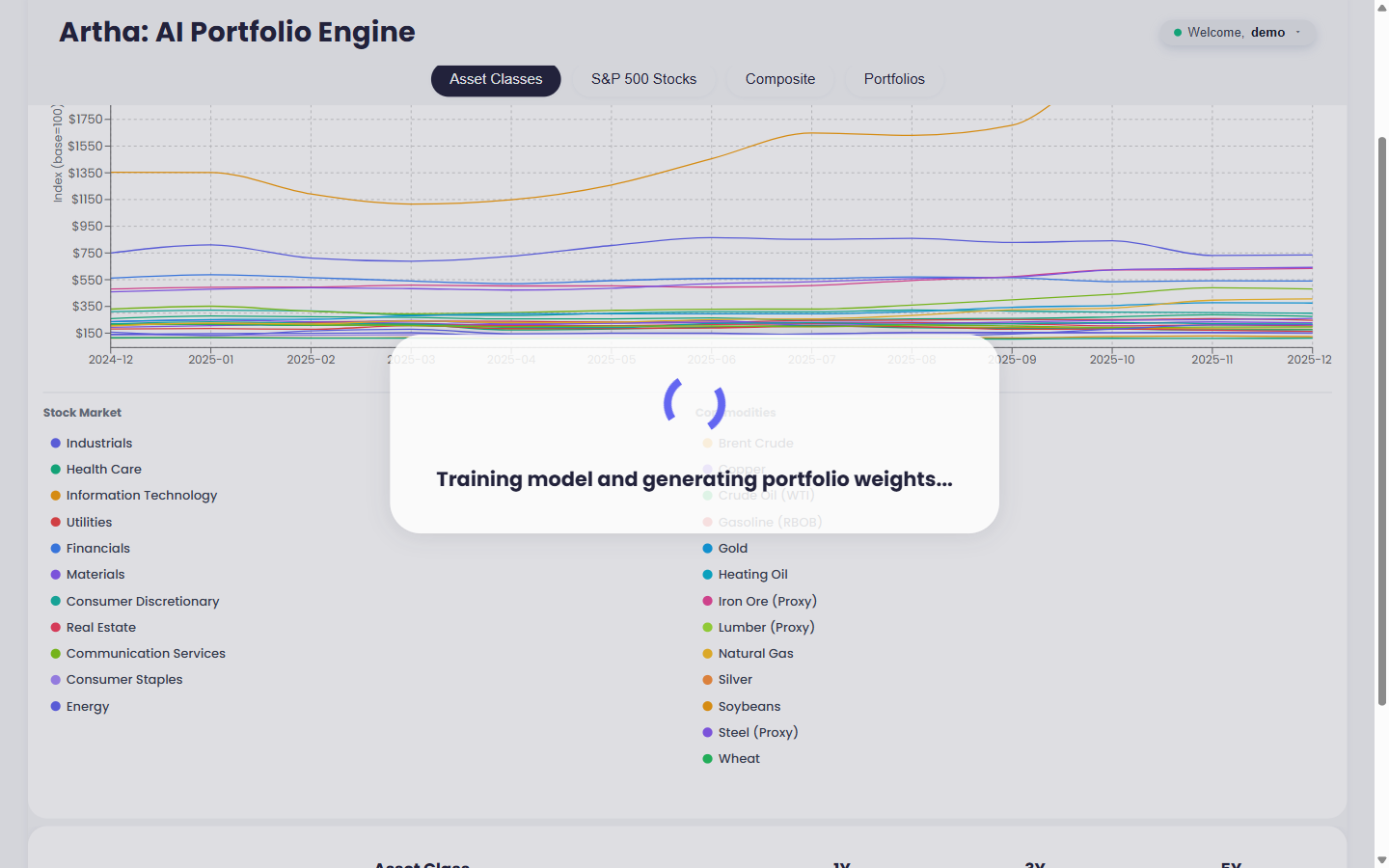
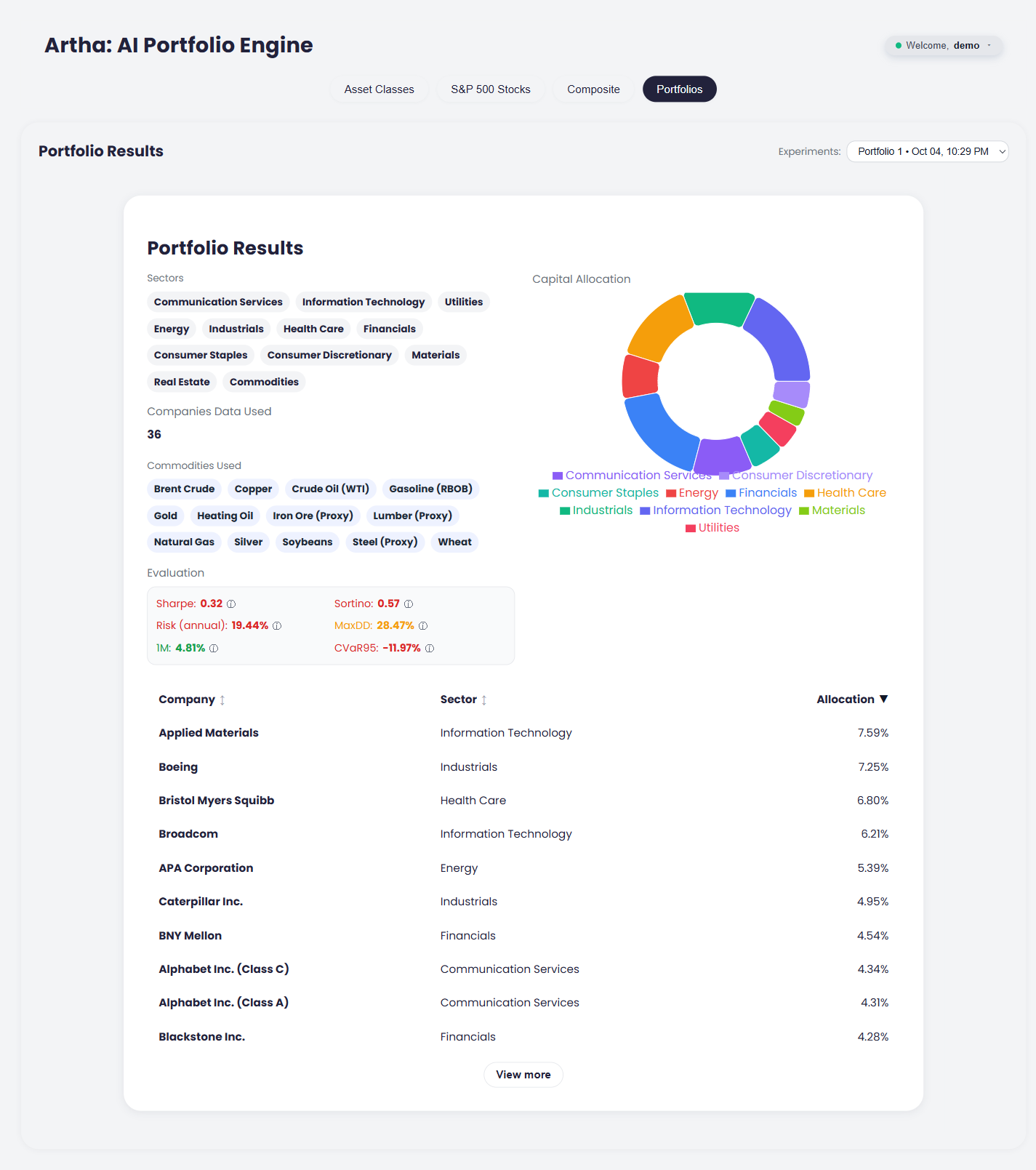
A PyTorch CNN that outputs portfolio weights directly, trained on a Sharpe-based objective over 24 assets.
Convolves along the time axis per asset over 50-day windows with GICS sector encoding, and emits weights through a softmax instead of forecasting prices.
Custom differentiable loss: Sharpe ratio, turnover commission, concentration penalty and an entropy bonus, benchmarked against equal weight.
Served as a Django REST API behind a React dashboard, packaged as one multi-stage Docker image.
A verifiable coding environment of the kind used to reward RL on code, with checks that catch reward hacking.
5 handwritten Python tasks plus a seeded task generator, each with a reference solution, hidden tests and an input generator for fresh tests.
Solutions graded in a locked-down Docker sandbox (no network, read-only root, CPU, memory and PID limits), with reward from per-test JUnit results.
Integrity checks zero the reward for cheating: leak, static and AST checks, a hardcode check and a hidden-vs-fresh differential check. Validated with 5 cheating agents; all scored 0 with checks on.
Employee onboarding and recognition platform, built by a team of four for the Workhuman-sponsored hackathon. I presented the live demo and took questions from the judges.
 Lighthouse
 SmartCart